Process and outcome of a four-week garden-enhanced nutrition education programme to improve knowledge and vegetable consumption of school-age children in Ibadan, Nigeria
DOI:
https://doi.org/10.26596/wn.202516253-65Keywords:
vegetables, garden-based learning, dietary practices, gardening, school gardening, food demonstrations, healthy food choicesAbstract
Background
Diets of school-age children are increasingly becoming energy-dense, coupled with the
poor consumption of vegetables and fruits. This situation predisposes them to
malnutrition and non-communicable diseases. A garden-enhanced nutrition education
programme was therefore designed to promote knowledge and consumption of vegetables.
Objective
To design a garden-enhanced nutrition education programme to promote knowledge and
consumption of vegetables.
Methods
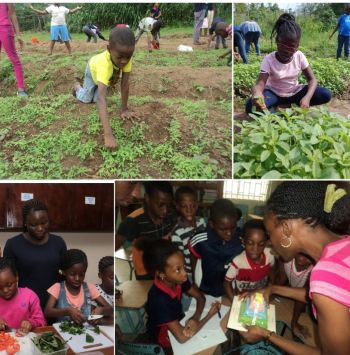
A 4-week garden-enhanced nutrition education pilot programme tagged ‘Kids Nutri
garden Vacation School (KNGVS) was implemented during the long vacation of elementary
schools. School-age children 6 – 11 (n=24) participated in the programme. The
intervention included weekly outdoor and indoor activities of hands-on vegetable
gardening, nutrition education lessons, and a cooking demonstration session. Data on
nutrition knowledge, asking behaviour and consumption of vegetables were obtained at
baseline (pre-test), endline (post-test) and six weeks follow-up and compared using one
way ANOVA. Qualitative data on parents’ perception of the intervention programme was
obtained and reported thematically.
Results
There was a statistically signifcant increase in nutrition knowledge scores: pre-test =
39.2±9.1, post-test = 48.3±6.7, which was maintained at the 6-week follow-up = 48.9±4.4,
F=13.45, p<0.00). The number of children who reported that they ate vegetables always
also increased: pre-test =12.5%, post-test = 20.8%, follow-up = 33.3%. All parents (100%)
reported that their children had become more conscious of consuming vegetables and
healthy food choices to a great extent.
Conclusions
The garden-enhanced nutrition education approach is a promising food-system related
framework that provides a window of opportunity for influencing knowledge and practice
of healthy eating among school-age children in developing countries like Nigeria. It
leverages hands-on learning to give the children first-hand experience on the linkages
between nutrition, health, agriculture and the environment at different levels of social
interaction. There is a need to test this framework further while implementing it at a larger
scale within the regular primary school academic calender.
Downloads
Published
Issue
Section
License
Authors retain all copyrights. In making a submission to World Nutrition, they are certifying that all material is theirs except quotations, as indicated, and that they have obtained permission for any photos, tables, or graphics taken from other publications or websites.