Skip to main content
Skip to main navigation menu
Skip to site footer
Open Menu
Home
About
About the Journal
History of the Journal
Indexing & Abstracting
Guide for Authors
Manuscript Handling and Editorial Workflow
Article Processing Charges (APC)
Editorial Roles and Responsibilities
About WPHNA
Instructions
Instruction for Authors
Instructions for Reviewers
Manuscript Preparation Guidelines
Issues
Current
Archives
Announcements
Journal Policies
Publication Policies
Publication Ethics & Malpractice Statement
Peer Review Policy
Complaints and Appeals Policy
Digital Archiving & Preservation Policy
Financial Transparency Statement
Anti-Plagiarism Policy
Conflicts of Interest Policy
Authorship & Publication Integrity Policy
Data Sharing and Reproducibility Policy
Post-Publication Discussion Policy
Policy on Generative AI and AI Assisted Technologies in Scientific Writing
Open Access & Copyright Policy
Become a Reviewer
Editorial Team
Contact
Search
Register
Login
Home
/
Archives
/
Vol. 16 No. 2 (2025)
Vol. 16 No. 2 (2025)
Published:
2025-06-30
Editorials
Turning the Tide: Reclaiming Nutrition Justice Amid Global Setbacks
Ted Greiner
1-2
pdf
DOI:
https://doi.org/10.26596/wn.20251621-2
Effects of cuts in development assistance on nutrition in low-income countries
Swati Jain; Ted Greiner
3-5
pdf
DOI:
https://doi.org/10.26596/wn.20251623-5
Original research
An exploratory analysis of infant and young child feeding perceptions and practices among South Asian women living in London
Ayesha Awal, Malika Al Kattan, Regina Keith Murphy
6-16
pdf
DOI:
https://doi.org/10.26596/wn.20251626-16
Formulation and assessment of an herbal tea powder
Kelly Manka Ngwa, Faith Akob, Desmond Mulak
17-24
pdf
DOI:
https://doi.org/10.26596/wn.202516217-24
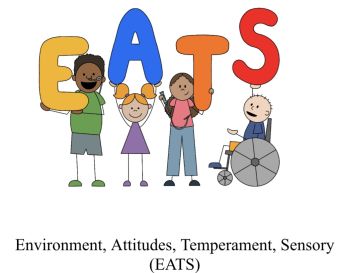
Investigation of the EATS Feeding Assessment as an Outcome Measure: A Case Series
Blair Carsone, Bryce Smith
25-28
pdf
DOI:
https://doi.org/10.26596/wn.202516225-28
Acceptability of flavoured zobo drink (Hibiscus sabdariffa) among undergraduate students of the University of Ibadan, Oyo State, Nigeria
Oyewole M. Fauziyah
29-35
pdf
DOI:
https://doi.org/10.26596/wn.202516229-35
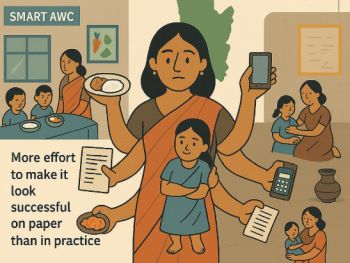
Is Child Nutrition a Priority in Kerala? An Exploration of the Integrated Child Development Services Programme
Rajeev Jayalakshmi, Srinivasan Kannan
36-46
pdf
DOI:
https://doi.org/10.26596/wn.202516236-46
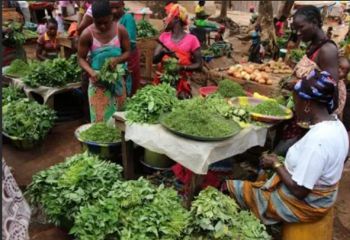
Consumption pattern of indigenous leafy vegetables among selected households in Ibadan Zone, Nigeria
Mojisola Fauziyah Oyewole, Grace Oluwaseun Olugbodi
47-52
pdf
DOI:
https://doi.org/10.26596/wn.202516247-52
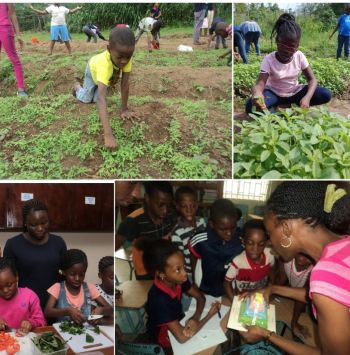
Process and outcome of a four-week garden-enhanced nutrition education programme to improve knowledge and vegetable consumption of school-age children in Ibadan, Nigeria
Shirley I. Ejoh, Ifeoluwa Bodunde, Aminat Oyedele, Melanie A. Gerdes, Rachel E Scherr
53-65
pdf
DOI:
https://doi.org/10.26596/wn.202516253-65
Assessment of anthropometric and dietary iron intake status among young women in university settings
Shilpee Agrawal, Dhrumisha Kanani
66-72
pdf
DOI:
https://doi.org/10.26596/wn.202516266-72
Dietary intake and dietary diversity of adults and children in the North West region of Cameroon: A comparative study
Faith A. Akob, Kirthee Pillay, Nicky Wiles, Muthulisi Siwela
73-86
pdf
DOI:
https://doi.org/10.26596/wn.202516273-86
Effect of nutrition education intervention on the knowledge, practices, and self-efficacy of lactating mothers with infants 0-12m attending a primary healthcare centre in Mararaba, Nigeria
Hudah Tahirah Sulayman, Moses Alilu Daikwo, Uju Dorathy Iliemene
87-94
pdf
DOI:
https://doi.org/10.26596/wn.202516287-94
Literature reviews
Intake assessment of saturated fat in palm olein and soya oil for pregnant and lactating women in Nigeria
Christopher Enasor Fregene, Sugra Fatima Tabi’a Mahmood, Dike Bevis Ojji, Abimbola Opeyemi Adegboye, Maduka Ephraim Ubiaru
95-99
pdf
DOI:
https://doi.org/10.26596/wn.202516295-99
Circadian cuisine in synchronizing holistic nutrition and biological rhythms
Amna Sajid, Muhammad Usman Khalid, Fatima Armish, Rabeea Jannat, Muhammad Maaz, Ayman Furqan
100-108
pdf
DOI:
https://doi.org/10.26596/wn.2025162100-108
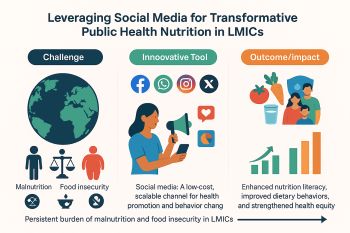
Leveraging social media for public health nutrition in low- and middle-income countries: Addressing malnutrition, enhancing food security, and promoting health equity
Kamryn Bailey, Stanley I. R. Okoduwa
109-121
pdf
DOI:
https://doi.org/10.26596/wn.2025162109-121
Commentaries
24-hours or 7 days’ recall in infant and young child feeding: implications for research in low and middle-income countries
Karimot O. Hammed, Toluwalope E. Eyinla, Rasaki A. Sanusi
122-127
pdf
DOI:
https://doi.org/10.26596/wn.2025162122-127
Avoid ultra-processed foods, not food processing: Why processed foods matter for nutrition security, economic growth, gender equality, and sustainability agendas in Africa
Hannah Ameye, Katrin Glatzel
128-134
pdf
DOI:
https://doi.org/10.26596/wn.2025162128-134
Make a Submission
Make a Submission
Language
English
Information
For Readers
For Authors
For Librarians
Keywords
social_media
Facebook
Twitter