Dietary consequences of the suspension of the National Home-Grown School Feeding Programme on Oyo State school food vendors
DOI:
https://doi.org/10.26596/wn.2025164109-117Keywords:
school feeding programme, food security, dietary diversity, livelihoodsAbstract
Objective
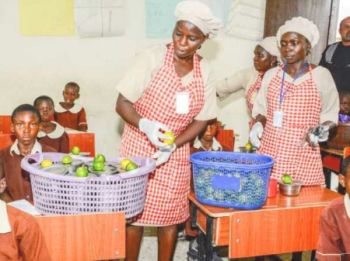
This study assessed the dietary consequences of the suspension of the National Home-Grown School Feeding Programme (NHGSFP) among school food vendors in Oyo State.
Methods
This cross-sectional study involved 315 NHGSFP food vendors. Data were collected using a semi-structured questionnaire that evaluated socio-demographics, perceptions, household food security, and dietary diversity. Perception was assessed using a 5-point Likert scale with 11 items and categorised as beneficial (1-2), neutral (3), and non-beneficial (4-5). Food security status before and after the suspension was assessed using the 21-point Household Food Insecurity Access Scale, categorised as food secure (<7), mildly food-insecure (7-11), moderately food-insecure (12-16), and severely food-insecure (>16). Dietary diversity was assessed using the standard Minimum Dietary Diversity for Women (MDD-W). Data were analysed using descriptive statistics and binary logistic regression (α0.05).
Results
Age of vendors was 46.8±8.5 years, 62.9% had 6–10-year work experience, 36.8% had NHGSFP as primary income source, and over 90% expressed a positive perception of NHGSFP. Following the NHGSFP suspension, the proportion of households reporting severe household food insecurity increased from 7.3% to 70.2%. Vendors relying solely on NHGSFP income faced twice the risk of severe food insecurity (AOR: 2.16; 95% CI: 1.09–4.24) compared to diversified earners. Only 16.9% achieved MDD-W (≥5 food groups). Mildly food-insecure vendors had >10-fold higher odds of meeting MDD-W than severely food-insecure peers (AOR: 10.63; 95% CI: 4.94–22.89).
Conclusions
The National Home-Grown School Feeding suspension disrupted food vendors' livelihoods, impaired household food access, and compromised the nutritional quality of their diets. Urgent reinstatement is recommended to restore economic stability and improve food and nutrition security in this group.
Downloads
Published
Issue
Section
License
Authors retain all copyrights. In making a submission to World Nutrition, they are certifying that all material is theirs except quotations, as indicated, and that they have obtained permission for any photos, tables, or graphics taken from other publications or websites.