Leveraging social media for public health nutrition in low- and middle-income countries: Addressing malnutrition, enhancing food security, and promoting health equity
DOI:
https://doi.org/10.26596/wn.2025162109-121Keywords:
Social media, public health nutrition, malnutrition, food security, health promotion, digital equity, LMICs, commercial determinants of health, digital health policyAbstract
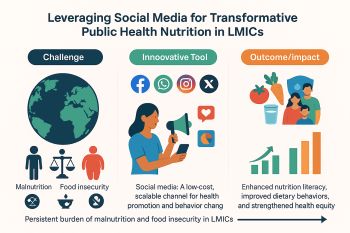
Malnutrition, in all its forms, remains a pressing global public health challenge disproportionately impacting low- and middle-income countries (LMICs). Despite progress, significant gaps in nutrition equity persist. The widespread adoption of social media, now exceeding five billion users worldwide, offers new, low-cost opportunities for scalable public health nutrition interventions. However, a comprehensive synthesis of its applications, effectiveness, and limitations within LMICs remain limited. This narrative review explores the role of social media in promoting public health nutrition across LMICs. It critically examines how digital platforms have been leveraged to improve nutrition education, promote dietary behaviour change, enhance food security, and advance health equity. The review also highlights key challenges and proposes directions for research and policy reform. Social media interventions show promise for increasing nutrition knowledge, engaging underserved populations, and supporting maternal and adolescent health. However, barriers such as the digital divide, low media literacy, misinformation, and unregulated marketing of ultra-processed foods (UPFs) limit broader impact. Integrating digital inclusion strategies and stronger policy frameworks is essential. Social media holds transformative potential for promoting health equity and addressing malnutrition in LMICs. To realise this, governments and stakeholders must address digital access gaps, regulate commercial influences, and support community-driven, evidence-based content delivery.
Downloads
Published
Issue
Section
License
Authors retain all copyrights. In making a submission to World Nutrition, they are certifying that all material is theirs except quotations, as indicated, and that they have obtained permission for any photos, tables, or graphics taken from other publications or websites.