Nutritional status and psychological distress of adolescent girls in Ernakulam, Kerala
DOI:
https://doi.org/10.26596/wn.202617159-68Keywords:
adolescent girls, nutritional status, overweight, obesity, anaemia, depression, anxiety, stress, DASSAbstract
Background
Adolescence involves substantial physical, psychological, and social changes, making nutrition and
mental health important public health concerns, particularly in socioculturally diverse regions
such as Kerala.
Objective
This study aimed to assess the nutritional status of adolescent girls aged 12–18 years, determine
the prevalence of depression, anxiety, stress (DAS), and identify correlates associated with DAS
among them.
Methods
A cross-sectional study was conducted in two selected panchayats among 150 adolescent girls using
school-based cluster sampling. Data was collected through face-to-face interviews using
validated tools, along with assessment of socioeconomic and nutritional status. Socioeconomic
status was determined using the Kuppuswamy scale. Nutritional status assessment included
BMI-for-age z scores, Waist-to-Hip ratio (WHR), and Waist-to-Height ratio (WHtR).
Haemoglobin levels were measured to assess anaemia. Dietary intake was evaluated using a 24-hour
recall of one weekday, while psychological distress was assessed using the DASS-Y scale.
Associations between selected variables and DASS-Y scores were statistically analysed.
Results
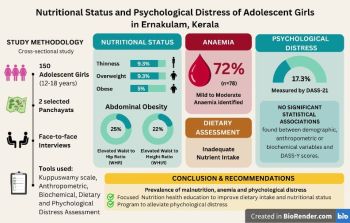
Thinness and overweight were each observed in 9.3% of participants, while 5.4% were obese. Elevated
WHR and WHtR were observed among 24.6% and 22% of participants, respectively, indicating notable
abdominal obesity. Mild to moderate anaemia was identified in 71.8% of those who were assessed
(n=78). Dietary assessment revealed inadequate average energy intake across all age groups, mainly
due to low carbohydrate and fat consumption, although protein intake was generally adequate.
Several micronutrients, particularly calcium, iron, riboflavin, vitamin A, and thiamine, were below
recommended levels, whereas vitamin B12 intake was adequate. Psychological distress, as measured by
the DASS-21, was observed in 17.3% of participants. No significant associations were found between
the demographic, anthropometric, or biochemical variables with the DASS-Y scores.
Conclusion
The findings highlight nutritional concerns among adolescent girls, including undernutrition,
excess weight, anaemia, and dietary deficiencies, along with psychological distress, underscoring
the need for integrated adolescent health
strategies.
Downloads
Published
Issue
Section
License
Authors retain all copyrights. In making a submission to World Nutrition, they are certifying that all material is theirs except quotations, as indicated, and that they have obtained permission for any photos, tables, or graphics taken from other publications or websites.