Food group diversity within the Supplementary Nutrition Programme of the Integrated Child Development Services Scheme of India
DOI:
https://doi.org/10.26596/wn.202617131-40Keywords:
ICDS, India, supplementary nutrition programme, food group diversity, Anganwadi centresAbstract
Context: A poor-quality diet with low diversity is central to the high prevalence of malnutrition among young Indian children. The Indian Integrated Child Development Services Scheme (ICDS) addresses this nutritional gap through its Supplementary Nutrition Program (SNP), which provides energy, protein, fat, and essential micronutrients to children via Take-Home Rations (THR, for children aged 6-36 months) and Hot Cooked Meals (HCM, for children aged 37-72 months).
Aims: To examine the diet diversity of THR and HCM provided under ICDS-SNP across Indian states and identify strategies for improvement.
Settings and Design: A pan-India study analysing 12 diverse food groups in the ICDS-SNP: cereals and millets, pulses and legumes, green leafy vegetables, other vegetables, roots and tubers, nuts and seeds, edible oils and fat, eggs, milk and milk-based products, other non-vegetarian foods, fruits, and sugar across states.
Methods and Material: Diet diversity scores for THR and HCM were calculated based on the provision of these food groups. Regional variations and inclusion of locally available foods were examined.
Statistical analysis used: Descriptive analysis was conducted to assess diet diversity scores across states. Regional patterns and variations in the SNP food composition were analysed.
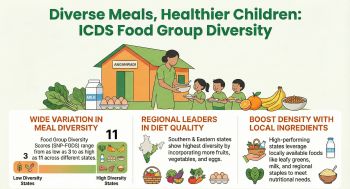
Results: The study revealed significant variability in diet diversity across states, with scores ranging from 3-11. Southern and Eastern states showed higher diversity, incorporating local fruits, vegetables, and animal-source foods like milk and eggs. Both THR and HCM were predominantly cereal based. Findings suggest that achieving diet diversity in ICDS-SNP is feasible but lagging states need tailored, geographically specific strategies.
Downloads
Published
Issue
Section
License
Authors retain all copyrights. In making a submission to World Nutrition, they are certifying that all material is theirs except quotations, as indicated, and that they have obtained permission for any photos, tables, or graphics taken from other publications or websites.